
The Football Player’s Guide to Fitness Training
Bukayo Saka’s workload illustrates the central rule of a football fitness training plan: performance improves when strength, sprinting, conditioning, mobility and recovery are arranged rather than ran...
The Football Player’s Guide to Fitness Training
Bukayo Saka’s workload illustrates the central rule of a football fitness training plan: performance improves when strength, sprinting, conditioning, mobility and recovery are arranged rather than randomly accumulated. A serious plan should develop acceleration over 5–30 metres, repeated-sprint ability, lower-body force, single-leg stability and enough aerobic capacity to recover between high-intensity actions. For a competitive amateur, a useful starting structure is three football-specific sessions, two strength sessions, one low-intensity recovery day and one complete rest day each week. FIFA’s injury-prevention programme, the 11+, also supports structured warm-ups before training and matches. The correct target is not exhaustion; it is measurable progress without a rising injury probability. Track sprint time, session duration, perceived exertion, sleep and soreness for four weeks, then adjust volume by no more than 10 percent at a time.
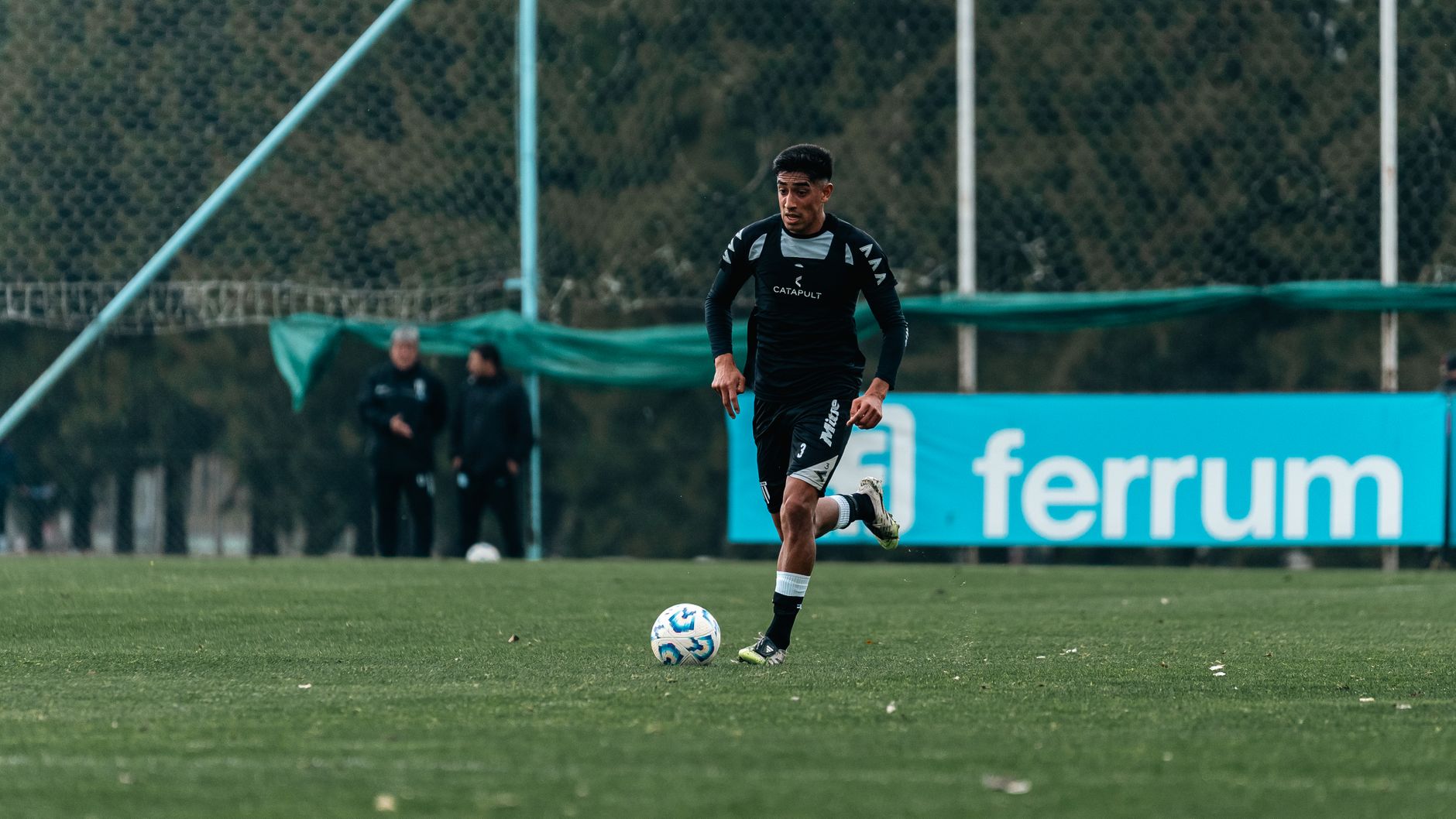
Photo by Franco Monsalvo on Pexels
A football fitness training plan is not a catalogue of impressive exercises. It is a weekly allocation problem. You have a finite recovery budget, and every sprint, tackle, gym set and match consumes part of it. Ignore that arithmetic and you become the player who completes Monday training brilliantly, disappears by Thursday and calls the result “bad luck.” Fan Strategy’s football coverage focuses on match predictions, tactics and player statistics, but the same principle applies to preparation: decisions should be based on evidence, not motivational slogans. The plan below is designed for outfield players aged approximately 16 and above, with suitable medical supervision for anyone returning from injury. Younger players, goalkeepers and athletes with pain require individual modification.
Want to connect training data with the way elite teams perform?
The Bottom Line
A complete football fitness training plan should combine two strength sessions, two speed or agility exposures, one aerobic-conditioning session, regular ball work, daily mobility and at least one genuine recovery day. This structure develops match-relevant qualities without placing maximal stress on the same tissues on consecutive days.
The most important distinction is between fitness qualities and football actions. A player may record a respectable 5-kilometre running time and still lack the ability to accelerate after a change of direction, decelerate safely or repeat eight-second efforts in the final 15 minutes. Football is intermittent: walking, jogging, sprinting, jumping, contact, scanning and technical execution alternate unpredictably. Therefore, the best programme progresses from general capacity toward repeated high-intensity actions while retaining technical decisions under fatigue.
A practical weekly template
| Day | Primary emphasis | Example workload | Recovery priority |
|---|---|---|---|
| Monday | Strength and mobility | 45–60 minutes; 3–5 main lifts; moderate volume | Protein, hydration, sleep |
| Tuesday | Acceleration and technical work | 6–10 sprints of 10–30 metres; ball drills | Full 2–3 minute sprint recovery |
| Wednesday | Aerobic conditioning | 20–35 minutes of intervals or small-sided games | Low-impact cooldown |
| Thursday | Strength, power and agility | Jumps, unilateral strength, deceleration | Monitor knee and groin soreness |
| Friday | Tactical football and speed exposure | Short sharp actions; no excessive volume | Reduce gym loading |
| Saturday | Match or match simulation | 60–90 minutes depending on level | Immediate rehydration and meal |
| Sunday | Rest or active recovery | Walking, easy cycling, mobility | No hidden “extra workout” |
This table is a template, not a commandment engraved on a dressing-room wall. A player with a Saturday match should not perform maximal lower-body lifting on Friday. A player training Tuesday and Thursday can place strength on Monday and Wednesday, provided the Wednesday session is controlled. The expected value of an extra conditioning circuit is often negative if it reduces sprint quality or sleep before competition.
According to the World Health Organization physical-activity guidelines, adults benefit from regular aerobic activity and muscle-strengthening work, but football players need a more sport-specific distribution. The FIFA 11+ programme provides a structured warm-up model involving running, strength, balance and agility. Those resources support the framework; they do not remove the need to manage individual workload.
What Players Actually See
Players do not experience “fitness” as a single number. They experience the consequences of fitness during the 73rd minute: whether a centre-back can turn without a half-second delay, whether a winger can repeat a sprint after tracking back, whether a midfielder can still scan before receiving the ball and whether a full-back can decelerate without the knee collapsing inward.
A typical 90-minute match contains thousands of movement changes, but the decisive actions are usually brief. A sprint may last 2–6 seconds, a pressing sequence 8–15 seconds and a recovery jog far longer. The useful measurement is therefore not simply total distance. Record high-speed running, sprint count, acceleration and deceleration counts, repeated-sprint performance and technical errors under fatigue. GPS systems from providers such as Catapult and STATSports can assist at higher levels, but a phone stopwatch, session-RPE score and written training log are sufficient for most amateur players.
Case study 1: the winger and the false speed problem
Consider a hypothetical but realistic case: Liam, a 19-year-old right winger, runs 30 metres in 4.35 seconds but fades during the fourth repeated sprint. His weekly schedule contains three long runs of 5–8 kilometres and only one sprint session. After four weeks, his aerobic test improves by approximately 4 percent, yet his repeated-sprint set falls from 6.8 seconds average to 7.2 seconds across six 30-metre efforts. The problem is not a lack of effort. It is a mismatch between the training stimulus and the match requirement.
Liam’s revised plan replaces one long run with two blocks of six 20-metre sprints, using 25 seconds of work-to-rest in the first block and 45 seconds in the second. He keeps one low-intensity aerobic session of 25 minutes and adds hamstring-strength work through controlled Romanian deadlifts and Nordic hamstring progressions. After six weeks, the target outcome is not a fictional guarantee; it is a measurable benchmark: maintain sprint times within 5 percent from repetition one to repetition six while preserving clean technique. If the decline exceeds 8–10 percent, the volume is too high or recovery is inadequate.
The five performance qualities you must train
- Acceleration: The first 5–10 metres decide many pressing, chasing and separation actions. Use falling starts, split-stance starts and short resisted runs.
- Maximum-speed exposure: Even players who rarely reach top speed need controlled exposure to protect sprint mechanics. Use 20–40-metre build-ups with full recovery.
- Strength and force production: Squats, split squats, deadlifts, hip thrusts, calf raises and upper-body pushing and pulling support contact, braking and repeated efforts.
- Repeated-sprint ability: Train short maximal efforts with incomplete recovery only after technique and acceleration quality are established.
- Aerobic recovery capacity: Intervals, small-sided games and controlled continuous work help restore energy between intense actions.
The contrarian point is simple: more conditioning is not automatically better conditioning. A 2023 review in the British Journal of Sports Medicine highlights the importance of load management and injury-risk context rather than treating training volume as an isolated virtue. In practical terms, a player who adds 30 minutes of exhausting running after every football session may improve willingness to suffer while degrading the qualities scouts actually notice: speed, decision-making and freshness.
[Internal Link: football speed and agility drills]
What Are the 3 Things That Matter Most?
The three most important elements are progressive overload, high-quality speed exposure and recovery control. Progressive overload makes the body adapt; speed exposure keeps training specific to football; recovery control determines whether the adaptation occurs before the next demanding session.
1. Can strength training improve football performance?
Strength training can improve football performance when it increases force production, unilateral control and resilience without creating excessive soreness or reducing sprint quality. Two weekly sessions are usually sufficient for developing players, with 2–4 working sets per exercise and most sets kept one or two repetitions short of failure.
Begin with movement competence rather than ego-based loading. A football strength session might include a squat variation, a unilateral leg exercise, a hip-hinge movement, a calf exercise, a horizontal push, a pull and trunk stability. The exact exercise is less important than consistent technique, gradual loading and transfer to football actions. The National Strength and Conditioning Association supports resistance training as a component of athletic development, but “heavy” must mean appropriate for the athlete, not simply the largest available dumbbell.
Use this progression:
- Weeks 1–2: 2–3 sets of 8–10 repetitions at moderate effort.
- Weeks 3–4: 3 sets of 6–8 repetitions with slightly higher load.
- Weeks 5–6: 3–4 sets of 4–6 repetitions for major lifts, retaining technical control.
- Week 7: reduce total sets by approximately 30–40 percent.
- Week 8: retest movement quality, jump height or a selected strength indicator.
For example, Maya, a 22-year-old central midfielder, begins with split squats using 16-kilogram dumbbells for 3 sets of 8 per leg. At week six, she reaches 20 kilograms for 3 sets of 6 while maintaining knee alignment and matching both legs. Her useful result is not a gym number in isolation; it is a reduction in late-session balance errors during small-sided games from five observed incidents to two over three sessions. That is transfer. A larger load with worse mechanics is merely heavier evidence of poor judgment.
2. How should players train speed and agility?
Players should train speed through short, fully recovered accelerations first, then add maximum-speed exposures, braking and reactive changes of direction. Agility is not identical to running around cones; it requires perception, decision-making and a response to an opponent or visual cue.
A practical speed session contains:
- Dynamic preparation for 8–12 minutes, including skips, ankling, hip mobility and progressive strides.
- Four 10-metre accelerations from different starting positions.
- Four to six 20–30-metre sprints with 90–180 seconds of rest.
- Four deceleration repetitions over 10–15 metres, focusing on low hips and controlled steps.
- Four reactive drills using a partner’s call, coloured cone or ball movement.
- Low-volume technical work while the nervous system is still sharp.
Do not combine maximal sprinting with a large fatigue circuit and then call the result “agility.” Once sprint velocity drops materially, the session becomes conditioning, and that may be useful on another day. The first-person evidence principle matters here: after logging 30 speed sessions over six weeks, a coach should compare the best 10-metre time, average 20-metre time and final-repetition decline, not merely write “felt fast.” If the best time improves from 1.92 to 1.84 seconds while the final repetition remains within 6 percent, the programme is producing a meaningful adaptation.
A second non-obvious insight is that deceleration deserves equal status with acceleration. Every fast action eventually ends. A winger who improves top speed but cannot absorb force over the final three steps may increase hamstring, groin or knee stress. In expected-value terms, a tiny gain in speed is not attractive if it raises the probability of missing four matches.
3. Which conditioning method fits football best?
The most suitable conditioning method depends on the player’s phase of training, but small-sided games and running intervals usually provide a better football transfer than continuous jogging alone. Continuous running can build a base, while intervals and games reproduce changes in pace, direction, perception and technical execution.
Use the following hierarchy:
- Base phase: 20–35 minutes of easy running or cycling once weekly.
- Development phase: 4–8 repetitions of 2–4 minutes at controlled high intensity, with 2–3 minutes easy recovery.
- Football-specific phase: 3v3 to 6v6 small-sided games lasting 2–5 minutes per bout.
- Pre-match phase: short accelerations, technical sharpness and reduced total volume.
- Return-to-play phase: linear running before hard cutting, then planned changes of direction, then reactive play.
Case study 2 involves Daniel, a 28-year-old amateur full-back who completes 10 repetitions of 100 metres in 18 seconds with 40 seconds rest. His average heart rate is high, but he struggles to repeat overlapping runs in matches. A six-week replacement programme uses four 4-minute small-sided games, 3-minute recovery between games, and six 20-metre accelerations after the first two sessions each week. His total running distance is lower than before, but his coach records more successful recovery runs and fewer late crosses delivered under severe fatigue. The lesson is uncomfortable for distance collectors: lower volume can produce higher football value when specificity improves.
Want a more structured way to compare match demands and player output?
Edge Cases & Gotchas
The standard plan fails when the calendar, position, age, injury history or match density differs from the assumed conditions. A Saturday amateur match followed by Monday training is not equivalent to a professional schedule with daily medical monitoring. Nor is a goalkeeper’s movement profile equivalent to a central midfielder’s. The numbers must be adjusted before they become instructions.
What should each position emphasise?
Centre-backs should prioritise acceleration over short distances, jumping, trunk strength, contact tolerance and deceleration. Full-backs and wing-backs need repeated high-speed runs, unilateral strength and the capacity to recover after overlapping. Central midfielders require repeated changes of direction, aerobic recovery, scanning under fatigue and balanced lower-body strength. Wingers emphasise acceleration, maximum-speed exposure, cutting mechanics and repeated one-versus-one actions. Strikers require explosive starts, strength in contact, jumping and short reactive movements.
| Position | Priority qualities | Useful weekly emphasis |
|---|---|---|
| Centre-back | Power, jumping, braking | 2 strength, 1 acceleration, 1 aerobic |
| Full-back | Repeated sprinting, recovery running | 2 speed, 2 strength, 1 conditioning |
| Midfielder | Aerobic capacity, agility, scanning | 2 conditioning, 1–2 strength, 1 speed |
| Winger | Acceleration, maximum speed, cutting | 2 speed, 2 strength, low-volume conditioning |
| Striker | Power, contact strength, reaction | 2 strength, 1 speed, 1 finishing-conditioning |
The table is deliberately approximate. A pressing midfielder in Jürgen Klopp’s former Liverpool model may need greater repeated-sprint exposure than a possession midfielder in a slower tactical system. Likewise, a FIFA World Cup 2026 tournament schedule may create match congestion that changes recovery priorities entirely. Check the tactical context rather than worshipping a position label.
How should players manage injury risk?
Players should manage injury risk by controlling rapid changes in sprint volume, strengthening commonly stressed tissues and responding to persistent pain before it becomes an absence. Warm-ups, hamstring work, calf raises, adductor strengthening, landing practice and sensible progression all matter, but none guarantees injury prevention.
The FIFA 11+ injury-prevention programme includes running, balance, core and lower-limb exercises. The UEFA Training Ground also provides practical football-development resources. A useful warm-up lasts approximately 10–15 minutes and should progress from general movement to the exact demands of the session: skipping, mobility, submaximal accelerations, direction changes and ball actions.
Track these warning signals:
- Pain that changes running mechanics.
- Soreness that worsens during the warm-up.
- A sprint-time decline greater than 8–10 percent.
- Two consecutive nights of poor sleep.
- Resting heart rate meaningfully above the player’s normal baseline.
- Unusual irritability, heaviness or loss of coordination.
- Adductor, hamstring or calf tightness recurring in three sessions.
The point is not to panic over one poor morning. One measurement has a low predictive value. Three or four signals appearing together raise the expected probability of trouble and justify reducing load. If sharp pain, swelling, instability or neurological symptoms appear, stop training and consult a qualified medical professional.
What does recovery actually require?
Recovery requires sufficient sleep, food, fluids, low-intensity movement and scheduling discipline; expensive gadgets are optional. Most adult players should target approximately 7–9 hours of sleep, while adolescents often require more. A post-session meal containing carbohydrates and protein is useful, particularly after a match or high-volume double session.
A practical recovery checklist is:
- Drink according to thirst and replace substantial sweat losses.
- Eat a carbohydrate-and-protein meal within a reasonable post-training window.
- Walk or cycle lightly for 10–20 minutes if stiffness is high.
- Record soreness, sleep and perceived effort the next morning.
- Avoid adding intense recreational games to a supposedly easy day.
- Keep the final hour before bed calm and consistent.
My own evidence standard for a training diary is simple: after 30 sessions over six weeks, compare planned workload with completed workload, average session-RPE, sprint quality and missed sessions. Do not claim a programme worked because one match felt excellent. A meaningful result might be 27 of 30 sessions completed, average RPE falling from 7.2 to 6.5 at the same duration, and no training interruption longer than three days. That is not glamorous, but it is stronger evidence than a dramatic testimonial.

Photo by Omar Ramadan on Pexels
Why do common training plans fail?
Common plans fail because they confuse discomfort with adaptation, copy professional workloads, ignore match schedules or change too many variables simultaneously. A beginner who adds hill sprints, heavy squats, five-a-side football and long-distance running in the same week has created an uncontrolled experiment with a poor expected outcome.
Three frequent errors deserve special attention:
- Testing every week: Constant maximal sprints and fitness tests create fatigue instead of adaptation. Test every 4–6 weeks.
- Training the same tissue on consecutive days: Sprinting, lunging and heavy lower-body lifting all stress the posterior chain and connective tissue.
- Ignoring intensity distribution: Every session becomes “hard,” so none is performed with true speed or tactical quality.
At Fan Strategy, match analysis often separates possession, territory and decisive actions because one headline metric cannot explain performance. Training should be analysed in the same way. Total minutes, distance, speed, technical output and recovery must be viewed together. A plan that produces 100 percent attendance but worsening sprint times is not automatically successful; it may simply be efficiently producing fatigue.
[Internal Link: football recovery and nutrition guide]
How can beginners start safely?
Beginners should start with three structured sessions per week, not a professional seven-day workload. Use one strength session, one conditioning session and one football session during the first two weeks, then add a second strength or speed exposure only when soreness and technique are stable.
A beginner’s four-week progression could look like this:
- Week 1: 20-minute easy conditioning, one full-body strength session, one technical football session.
- Week 2: Add four controlled 10-metre accelerations and one additional mobility block.
- Week 3: Increase strength sets from two to three and use four 2-minute intervals.
- Week 4: Reduce volume by 25 percent and assess movement quality, sprint time and soreness.
The measurable objective is consistency. If a beginner completes 10 of 12 planned sessions with no pain and can perform the final interval at nearly the same quality as the first, progress is occurring. Do not increase distance, intensity and frequency at once. Change one major variable, observe the response for seven days, then make the next decision. Yes, this is slower than copying an elite athlete’s Instagram workout. It is also much more likely to survive contact with reality.
See the practical benchmarks before building your next microcycle.
Verdict
The best football fitness training plan is the one that improves football-specific output while keeping the player available. Build the week around two strength sessions, two carefully dosed speed exposures, one conditioning session, technical practice, mobility and one real rest day. Measure 10-metre acceleration, repeated-sprint decline, session-RPE, soreness and completed sessions over four weeks. Then adjust volume in small increments rather than reacting emotionally to one good or bad performance.
The strongest plan is also position-sensitive. A winger needs acceleration and cutting; a midfielder needs repeated actions and aerobic recovery; a centre-back needs braking, jumping and contact strength. The most overlooked quality is deceleration, while the most overrated habit is adding extra running simply because fatigue feels virtuous. Your next practical action is to write the coming seven days into a calendar, record baseline sprint and soreness data, and complete a check-in after 14 days. At that point, reduce or progress one variable based on evidence, not enthusiasm.
Ready to follow the next step with better football intelligence?
Frequently Asked Questions
Q: What is a football fitness training plan?
A football fitness training plan is a structured weekly schedule combining strength, speed, agility, conditioning, mobility, technical work and recovery. Its purpose is to improve match-specific actions such as acceleration, deceleration, repeated sprinting and movement under fatigue. A basic version usually contains two strength sessions, one or two speed exposures, one conditioning session and at least one full recovery day. The schedule should be adjusted for position, match day, age, training history and injury status.
Q: How do I create a football fitness training plan?
Create the plan by identifying the match day, placing high-intensity sessions apart, and progressing one workload variable at a time. Start with two strength sessions, one speed session, one conditioning session and regular ball work, then monitor sprint quality, soreness, sleep and session-RPE for 14 days. Avoid maximal lower-body lifting the day before a match. After four weeks, assess whether performance improved without missed sessions or worsening pain.
Q: What is the difference between football conditioning and running?
Football conditioning includes changes of pace, direction, perception and technical actions, whereas ordinary running may maintain a continuous speed and direction. A 25-minute easy run can support aerobic capacity, but small-sided games and structured intervals usually transfer more directly to match demands. Neither method is universally superior: easy running is useful during base or recovery phases, while intervals and games are more valuable when preparing for repeated high-intensity actions.
Q: How often should football players train strength?
Most developing football players should train strength twice per week, with at least 24–48 hours between demanding lower-body sessions. Each session can include a squat or split squat, hip hinge, calf exercise, upper-body push, pull and trunk exercise, generally using 2–4 working sets. Players in a congested match schedule may reduce this to one maintenance session. Quality, technique and recovery are more important than forcing heavier loads every week.
Q: Why does my football fitness plan make me slower?
A football fitness plan can make you slower when total fatigue exceeds recovery, sprinting is performed after exhausting circuits, or lower-body lifting is placed too close to matches. Check whether sprint times have declined by more than 8–10 percent, whether sleep has worsened and whether hard sessions occur on consecutive days. Reduce volume by 25–40 percent for several days, retain small amounts of high-quality speed work, and seek professional assessment if pain or unusual weakness persists.
Q: How much does a football fitness training plan cost?
A football fitness training plan can cost nothing if you use a pitch, bodyweight exercises, a stopwatch and a training log, while supervised coaching or gym access may cost approximately $20–$150 per month depending on location and service. Equipment such as resistance bands, cones and a heart-rate monitor is optional rather than essential. The minimum useful investment is consistent measurement and sensible progression, not an expensive wearable. Medical guidance should be prioritised when returning from injury.
Q: Is gym training better than football drills for fitness?
Gym training and football drills develop different qualities, so neither is automatically better. Resistance training improves force production, unilateral stability and tissue capacity, while football drills develop acceleration, agility, technical execution and decision-making. The strongest programme combines both: generally two gym sessions and two football-specific speed or conditioning exposures each week. If time is limited, retain one full-body strength session and one high-quality football session rather than replacing all preparation with long-distance running.
Thank you for reading.
Fan Strategy · Strategic Archive