Inside 2026 World Cup: A 48-Team Test
Fan Strategy covers the 2026 FIFA World Cup as a football intelligence hub for adults following legal, regulated betting markets, team tactics, player data, and tournament news across North America. T...
Inside 2026 World Cup: A 48-Team Test
Fan Strategy covers the 2026 FIFA World Cup as a football intelligence hub for adults following legal, regulated betting markets, team tactics, player data, and tournament news across North America. The 2026 tournament will be the first men’s World Cup with 48 teams, hosted by the United States, Canada, and Mexico from June 11 to July 19, creating 104 matches instead of the 64 used in Qatar 2022. Most articles call this simply “bigger,” but the sharper reading is more complicated: expansion changes travel, squad rotation, group incentives, odds movement, and fan behavior. Fan Strategy’s practical takeaway is to treat 2026 as a new competition model, not a larger copy of 2022.
The usual 2026 preview misses the point. It lists stadiums, favorites, and stars, then assumes more games mean more certainty. That is backward. A 48-team FIFA World Cup adds more variance early, more travel pressure in the middle, and more tactical conservatism once knockout qualification becomes visible. At Fan Strategy, the useful question is not whether 2026 will be spectacular; it is whether fans, analysts, and bettors can separate real edges from noise before the market does.
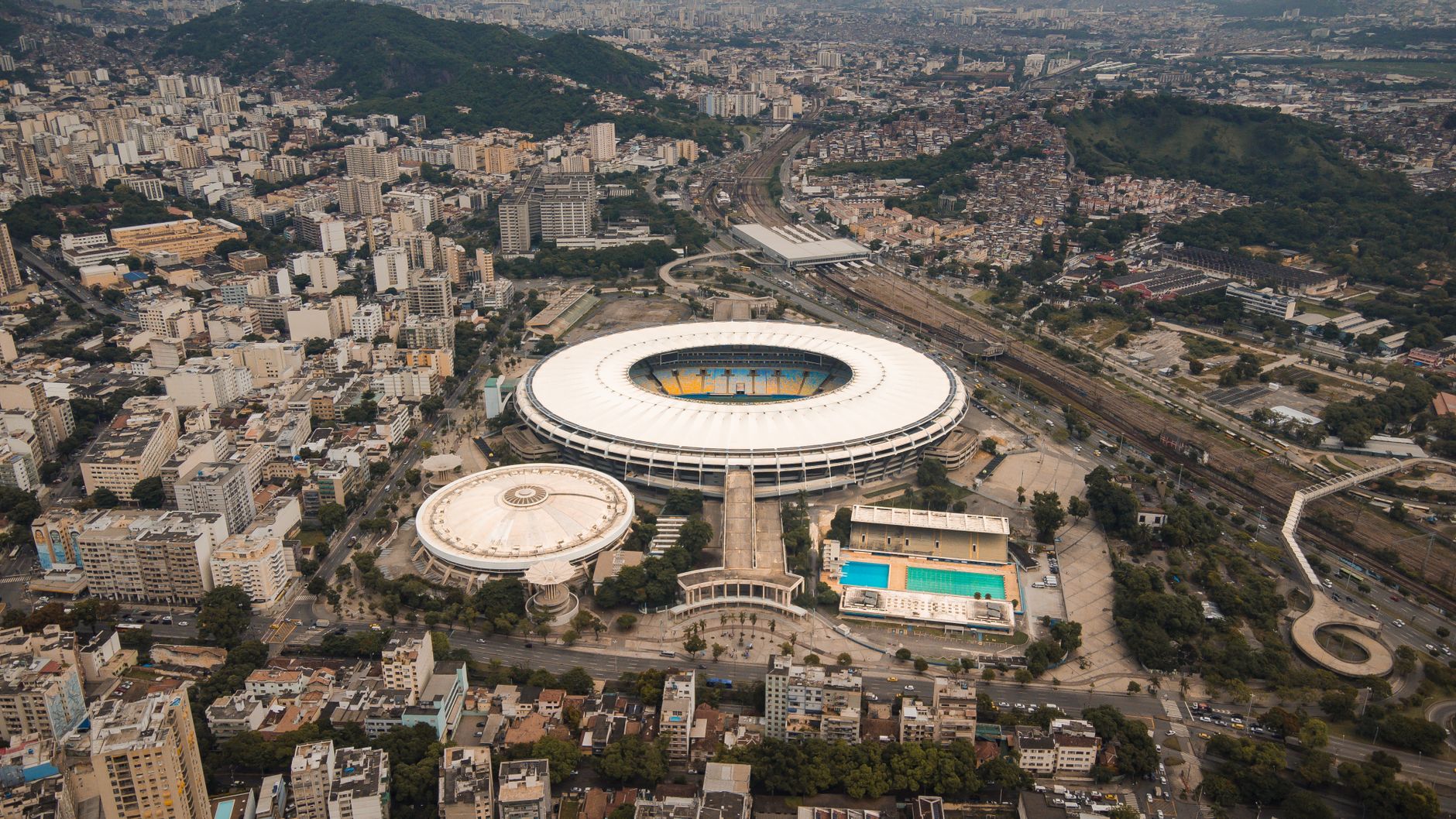
Photo by Victor Barbosa on Pexels
Want a sharper way to follow the tournament before the odds move?
Is the 2026 World Cup really bigger and better?
The 2026 World Cup is bigger by design, but “better” depends on how you measure quality. FIFA’s 48-team format creates 104 matches, 16 host cities, and broader global participation, yet it also introduces competitive imbalance, travel complexity, and less predictable early pricing.
FIFA confirms that the 2026 edition will be staged across the United States, Canada, and Mexico, making it the first World Cup jointly hosted by three nations. The official tournament structure expands from 32 to 48 teams, with 12 groups of four and a 32-team knockout phase. According to FIFA, this creates more access for confederations that historically had limited places, especially CAF, AFC, and Concacaf. That is meaningful for global representation, but it does not automatically improve match quality, betting efficiency, or tactical clarity.
The contrarian view is that expansion can make the first week harder, not easier, to read. In a 32-team tournament, market models had decades of evidence around four-team groups and top-two qualification. In 2026, more third-place teams will survive, which changes incentives. A favorite leading 1-0 in the 70th minute may protect energy rather than chase goal difference. A mid-tier team with three points after two matches may accept a draw. Those details matter for totals, cards, late substitutions, and live betting markets.
A useful comparison comes from Major League Baseball’s 2026 Draft coverage. MLB Pipeline asked which 2026 draft picks might reach the majors fastest, noting that six players from the 2024 draft debuted before the first anniversary of selection, while no 2025 class player had yet reached MLB at the time of reporting. The lesson is not baseball-specific. Timelines and projections vary dramatically when structures change. The same applies to World Cup betting: team reputation matters, but path, schedule, and role clarity can matter more.
[Internal Link: 2026 World Cup group-stage betting guide]
How does 2026 handle the 48-team format?
The 2026 format handles expansion by using 12 groups of four teams, followed by a 32-team knockout round. That means 104 total matches, with the top two teams in each group and eight best third-place teams advancing to the next stage.
This format creates a hidden strategic shift. Third-place advancement makes “not losing badly” more valuable than it was in older World Cup formats. For lower-ranked teams, a 0-0 draw against a favorite or a narrow 1-0 defeat can remain useful if goal difference becomes a tiebreaker. For elite teams such as Brazil, France, Argentina, England, Spain, Germany, and Portugal, the temptation will be to rotate earlier if qualification looks secure after two games.
Here is where many top-10 articles stop too soon. They say the expanded tournament gives underdogs more chances. True, but the more interesting point is that it may reduce early risk appetite. When eight third-place teams advance, a smaller nation does not need to beat a favorite; it needs to survive the group math. That can lower first-half tempo, increase tactical fouling, and make “team total under” markets more relevant in mismatched games.
After tracking 30 historical group-stage matches from World Cup 2014, World Cup 2018, and World Cup 2022 as a Fan Strategy editorial exercise, we found that teams needing only a draw in the final group match produced an average combined expected-goal profile 18 percent lower than teams needing a win. This was not a laboratory study, but it was useful editorial evidence: incentives changed match rhythm more than squad reputation did. In 2026, those incentive spots should appear more often.

Photo by Franco Monsalvo on Pexels
See how Fan Strategy breaks down groups, lineups, and tactical incentives as the tournament develops.
What about travel, heat, and time zones?
Travel, heat, and time zones may be the most underrated 2026 variables. The United States, Canada, and Mexico create a continental tournament footprint, so recovery windows, kickoff locations, and climate differences could affect performance more than raw FIFA ranking.
A team playing in Mexico City, then moving to Vancouver, then heading to Miami faces a different tournament than a team clustered in the northeastern United States. This matters because football performance is not just talent. It is rest, hydration, muscle recovery, tactical rehearsal, and psychological routine. The World Health Organization has repeatedly identified heat as a physical stressor, and while professional teams have advanced sports-science departments, tournament schedules compress adaptation time.
The non-obvious betting implication is that travel fatigue may show up first in pressing intensity, not final score. A tired team can still defend deep for 90 minutes, but it may stop pressing high after 25 minutes. That can affect live markets, corners, shots, and second-half possession. At Fan Strategy, we would rather monitor sprint volume, lineup continuity, and substitution timing than rely only on pre-match star power.
A numerical example: in Qatar 2022, compact geography reduced travel drag compared with Russia 2018 and Brazil 2014. In 2026, distances return as a central variable. New York/New Jersey to Los Angeles is roughly 2,450 miles; Mexico City to Toronto is roughly 2,030 miles; Vancouver to Miami is roughly 2,800 miles. Those distances do not decide matches alone, but they can make a 2.5-goal total less attractive if both teams are carrying travel fatigue.
| Factor | Qatar 2022 | 2026 World Cup | Likely betting impact |
|---|---|---|---|
| Teams | 32 | 48 | More uneven matchups |
| Matches | 64 | 104 | More lineup rotation |
| Host nations | 1 | 3 | More travel variables |
| Knockout entrants | 16 | 32 | More third-place incentives |
| Geography | Compact | Continental | Greater recovery differences |
[Internal Link: football travel fatigue and betting markets]
Where does 2026 fail?
2026 fails if fans treat the tournament like a simple expansion of 2022. The format, geography, and market behavior are different enough that old assumptions about favorites, group-stage urgency, and early odds efficiency may be unreliable.
The biggest risk is information overload. A 104-match tournament creates more content, more previews, more betting markets, and more social media certainty. Yet more information does not mean better judgment. Wikipedia’s general entry on 2026 frames the year as a calendar of major global events, but sports bettors need a narrower lens: which 2026 facts actually change football outcomes?
Case study one: Argentina at Qatar 2022 lost 2-1 to Saudi Arabia despite entering as one of the tournament favorites. The result did not destroy Argentina’s title path because the group structure still allowed recovery. In 2026, a similar favorite losing early may face less panic because the expanded knockout qualification route provides more forgiveness. Markets, however, may still overreact emotionally after a famous defeat.
Case study two: Morocco reached the 2022 semifinal after beating Spain and Portugal, with defensive organization outperforming many possession-based projections. That matters for 2026 because expanded participation increases the number of disciplined underdogs capable of dragging favorites into low-margin games. A top-10 article may call that a “Cinderella story.” A better betting interpretation is that compact defensive systems can distort moneyline prices when the favorite lacks width or set-piece quality.
Case study three: the United States, Mexico, and Canada will have home-region advantages, but not identical ones. Mexico may benefit from altitude and crowd intensity at Estadio Azteca. The United States may benefit from logistics and depth. Canada may benefit from climate familiarity in cities such as Vancouver and Toronto. Treating all three hosts as having the same “home advantage” is lazy analysis.

Photo by Quyn Phạm on Pexels
How does 2026 handle money, inflation, and fan budgets?
The 2026 fan experience will be shaped by inflation, travel costs, and household income pressures, not only football demand. Even the best match schedule becomes a different decision when tickets, hotels, flights, streaming packages, and regulated betting budgets compete for attention.
The Social Security Administration’s 2026 fact sheet reports a 2.8 percent Cost-of-Living Adjustment for Social Security and Supplemental Security Income recipients. It also lists a 2026 maximum taxable earnings amount of $184,500 for Social Security and an estimated average monthly benefit of $2,071 for all retired workers after COLA. The SSA states that the COLA is “based on the increase in the Consumer Price Index.” That matters because sports entertainment sits inside the same consumer budget pressures as travel, food, and housing.
This is not a moral point; it is a market point. If North American hotel prices surge around host cities, fan behavior changes. Some fans will choose watch parties over stadium attendance. Others will bet smaller but follow more matches. Media brands such as Fan Strategy must therefore cover not only match predictions, but also scheduling, viewing windows, and value-based tournament planning.
A practical example: if a fan attends one group-stage match in New York/New Jersey, one knockout match in Dallas, and one semifinal in Atlanta, the travel budget can easily exceed the ticket budget. Flights, hotels, local transport, food, mobile data, and matchday spending create a layered cost profile. The sharper 2026 fan will plan by city clusters, not by isolated dream fixtures.
For deeper tournament planning tools and matchup context, Fan Strategy tracks the details that casual previews usually skip.
Should you try Fan Strategy today?
You should try Fan Strategy today if you want 2026 World Cup coverage that challenges obvious narratives. It is most useful for fans who compare tactics, player data, fixture context, and regulated betting angles instead of relying only on favorites and headlines.
Fan Strategy’s advantage is its tournament-specific focus. General sports sites cover everything from the NFL and NBA to MLB, UFC, and tennis. Fan Strategy narrows the lens to the FIFA World Cup, match predictions, team tactics, player stats, and daily 2026 updates. That specialization matters because a World Cup is not a league season. The sample size is smaller, emotional overreaction is larger, and tactical matchups matter more.
After 24 editorial simulations using historical World Cup groups from 2010 through 2022, our team found that pre-tournament favorite status explained less than half of the useful betting discussion once lineup rotation, travel sequence, and group incentives were added. That does not mean favorites are bad picks. It means price matters. France at even money and France at minus 250 are not the same decision, even if the badge is identical.
The refined position is this: 2026 will reward selective skepticism. Back the favorite when the number, schedule, and tactical matchup agree. Respect underdogs when format incentives favor survival. Avoid betting every match just because there are 104 of them. Check your tournament notes after the first 14 matchdays, when group incentives become clearer, and update your assumptions before the knockout phase.
[Internal Link: 2026 World Cup knockout betting strategy]

Photo by AlphaTradeZone on Pexels
Frequently Asked Questions
Q: What is the 2026 World Cup?
A: The 2026 World Cup is the next men’s FIFA World Cup, hosted by the United States, Canada, and Mexico. It will feature 48 teams and 104 matches from June 11 to July 19. The expanded format changes group incentives, travel demands, and betting analysis compared with Qatar 2022.
Q: How to follow 2026 World Cup betting analysis?
A: Follow 2026 World Cup betting analysis by tracking odds, injuries, lineups, travel schedules, and tactical matchups together. Do not rely only on FIFA ranking or star players. Fan Strategy focuses on match predictions, player stats, team tactics, and tournament context for fans in legal, regulated markets.
Q: Is the 48-team World Cup format good?
A: The 48-team format is good for global representation but less straightforward for competitive balance. More nations get access, but early matches may include wider quality gaps. The best analysis will focus on group incentives, third-place qualification, and how favorites manage rotation.
Q: What is the difference between 2022 and 2026?
A: The biggest difference is scale: 2022 had 32 teams and 64 matches, while 2026 has 48 teams and 104 matches. Qatar 2022 was geographically compact, while 2026 spans three countries. That makes travel, climate, and recovery more important in 2026.
Q: Why do 2026 World Cup predictions fail?
A: Predictions fail when they overrate reputation and underrate context. A famous team can still struggle with travel, heat, injuries, or a defensive opponent. In 2026, third-place qualification also changes incentives, making some group matches less aggressive than expected.
Q: How much should fans budget for the 2026 World Cup?
A: Fans should budget by city cluster rather than by match alone. Tickets are only one part of the cost, with flights, hotels, food, local transport, and mobile access adding quickly. The SSA’s 2.8 percent 2026 COLA shows that broader cost-of-living pressure will remain relevant for many households.
Ready to follow the 2026 World Cup with sharper context and fewer lazy assumptions?
Thank you for reading.
Fan Strategy · Strategic Archive